
SA Investments in CEE
South African Companies and Businessman have, in recent times, been making major investments in Central and Eastern Europe (CEE). A recent assessment (June 2019) showed that of the 47 % invested offshore by South African Businesses and Businessman, almost 30 % went into ‘Eastern Europe’ or the CEE region. The economic sectors of the CEE economies that have been most attractive to South African capital, are real estate.
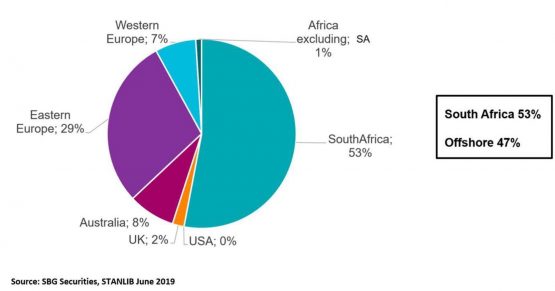
South African Companies share of real estate investment in Central and Eastern Europe had increased substantially over recent years
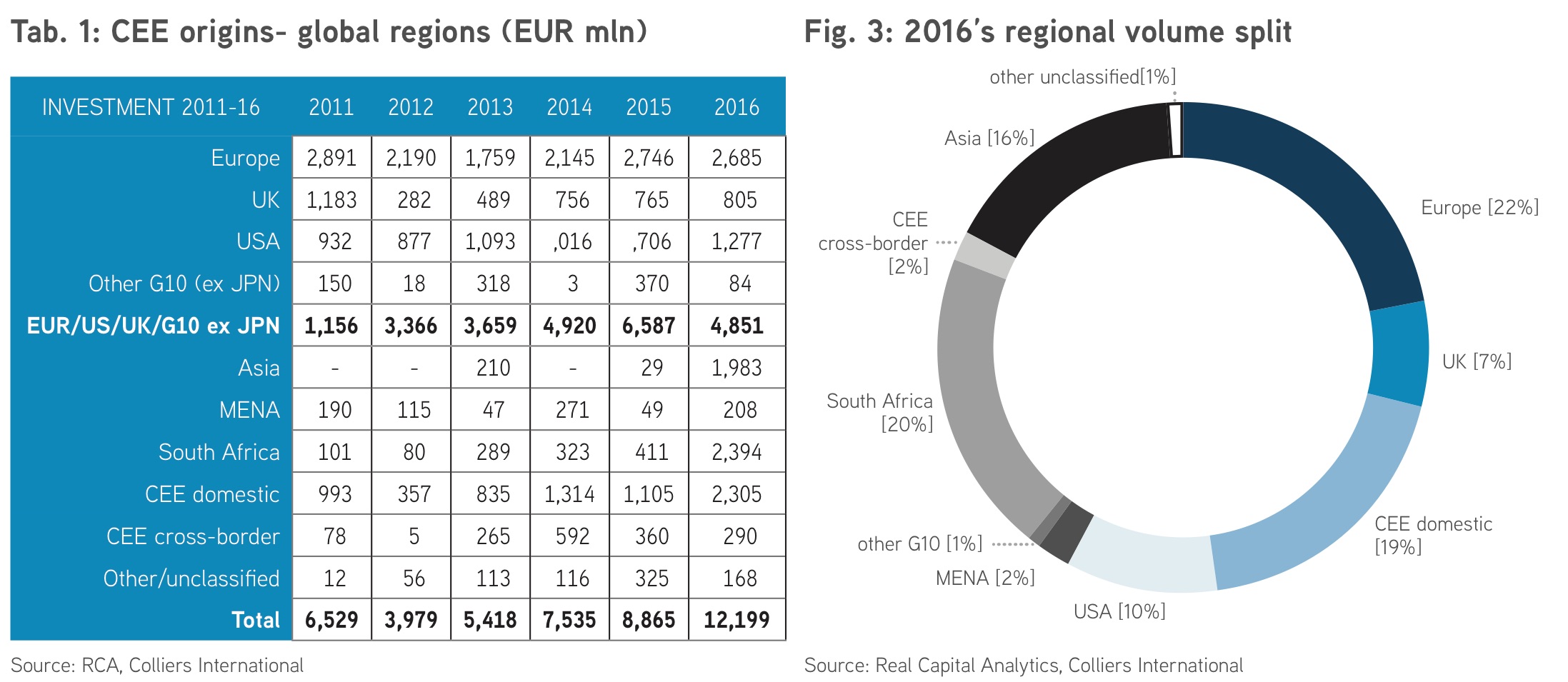
According to data from Colliers International, South Africa’s share of real estate investment going into key CEE countries (including the dynamic group of Central European nations of Hungary, Czech Republic, Poland, Slovakia – namely the Visegrad 4 countries; along with others in the region such as Romania and Bulgaria) has grown from 2% in 2012, to 20% in 2016. There are a minimum of 10 SA listed REITs (Real Estate Investment Trusts), that have direct or indirect investments in Central and Eastern Europe.
According to the recent European Attractiveness Survey – EY in 2019, Central and Eastern Europe has been viewed as the World’s 2nd most attractive investment market. The EY survey has been acknowledged as key source of insight into foreign direct investment (FDI).
South African multinational enterprises have discovered that Central and Eastern Europe in general, offer the investor a stable, reliable and predictable business environment; along with a relatively easy access to the EU market, combined with cost effective access to a well educated, and skilled work force. The recent movement of SA capital overseas to the CEE region, has largely been as a result of various circumstances faced by many SA Corporates and Businessman back in SA – For e.g. such factors such as the slow economic growth of the SA economy; BBBEE; high taxation; high cost of doing business in SA; corruption, political uncertainty, and coupled with issues such as high crime and security issues. South African businesses have more often ‘stumbled upon’ the unique investment advantages and opportunities provided by the CEE region, through ‘word of mouth’, business networks and of course exposure to this captivating region through fellow South Africans and of course European citizens from this region.
Business investments in Central and Eastern Europe have often taken place without any involvement with SA government departments, as many SA enterprises have relied upon their own resources and skills to undertake enterprising initiatives abroad, and on their own terms.
The SA government’s departments (under the grip and control of the ruling party), such as the International Affairs (Foreign Affairs) department, and the SA Trade and Industry Department; did not identify the CEE region as significant investment and trade source target markets. This especially in light of the fact that:
- In general Sub-Saharan African countries do not have any meaningful commercial strategies aimed at furthering relationships with Central and Eastern Europe.
- That these CEE countries had cast aside their previous forced repressive, Soviet Block Communist political systems, ideologies and policies; much to the dismay of of influential coalition ruling party alliance members within the national SA government, who had somewhat idealised these former ‘socialist’ party systems and policies.
- The SA government Trade & Industry / Economic Development ministries had perceived the CEE region as serious international trade and investment (FDI) competition, in terms of ‘Developing Nations or Economies’.
- The SA government ruling party role-players preferred to rather focus their ‘international trade, networking and political advances’ on those countries that were either ‘Communist or Socialist’ (China, Venezuela, Cuba, etc) systems, or those ‘glitzy Western Countries’ (USA, Western Europe, Canada, Scandinavian Countries, etc).
Many of these Central and Eastern European Nations have embarked on some form of Trade and Investment outreach programs targeting, amongst other African countries, South Africa. In 2013, Poland initiated a ‘Go Africa’ strategy to intensify its trade relationship with a targeted group of African countries and recently the new editions to the Polish Foreign Policy Strategy place emphases on establishing stronger commercial links with these identified African countries; then in 2015, Hungary introduced a new foreign policy strategy, called the ‘Opening to the South’ which included targeting a select group of African countries stretching from North Africa to Central Africa and including Sub-Saharan African states; then as early as 2006 the Czech Ministry of Foreign Affairs together with their Ministry of Industry and Trade, introduced policies and commercial strategies targeting various African states including sub-Saharan Africa, that included strengthening economic diplomacy in the region; other states such as Bulgaria and Romania, despite a growing trade relationship with sub-Saharan Africa, have not yet put in place any meaningful commercial policies towards Africa in general; while in recent years Russia became part of the so-called ‘BRICS’ initiative (which has yet to show any meaningful benefits to the participating countries, except probably China).
Many of these initiatives were somewhat of a ‘hit and miss affair’, and were often fairly low-keyed, ineffective programs that seemed to lack a meaningful targeted market approach, often handicapped by insufficient marketing budgets and a lack of manpower. However the ‘message’ has systematically reached some influential business role-players and corporates in SA, that Central and Eastern Europe is open to SA investments; providing a solid, stable, safe environment to do business in.